Indian space-tech startup InspeCity has raised approximately $10.5 million (₹100 crore) in pre-Series A funding, giving the company fresh capital to accelerate its ambitious plans to service, inspect and extend the lives of satellites already operating in space.
The funding round was led by Speciale Invest and technology investor Ashish Kacholia, with participation from Antler Elevate, Antler India, Manish Gandhi, Shastra VC and other investors.
The investment comes as InspeCity prepares to move beyond laboratory development and begin demonstrating its technologies in orbit.
Four Space Missions Planned Over the Next 18 Months
A significant portion of the new funding will support four in-orbit missions planned over the next 12 to 18 months.
Rather than attempting to demonstrate all its technology during a single launch, InspeCity plans to gradually increase the complexity of each mission.
The programme will test technologies including propulsion, sensing, autonomous operations, robotics, rendezvous and proximity operations, docking and eventually in-space refuelling.
The first missions are expected to use InspeCity’s RIG, or Remote Inspection and Guidance, platform to demonstrate rendezvous and proximity operations.
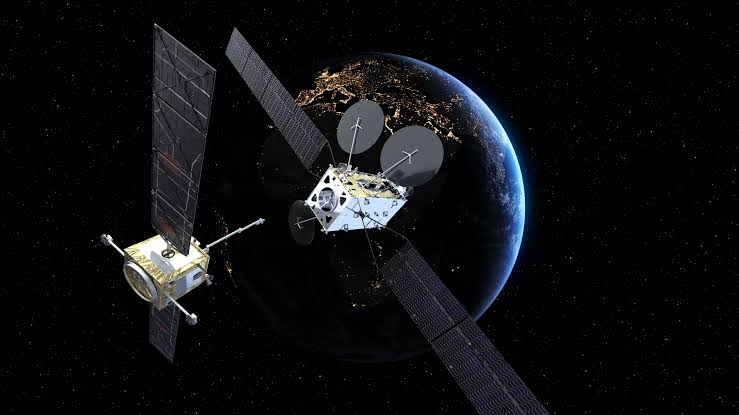
Later missions will involve its VEDA — Vehicle for Life Extension and Deorbiting Activities — platform, which is being developed to approach and service satellites already in orbit.
Fixing Satellites Instead of Replacing Them
Founded in 2022, InspeCity is tackling a major challenge facing the rapidly expanding global space economy: what happens when an expensive satellite runs out of fuel, experiences a technical problem or reaches the end of its expected operational life?
Traditionally, operators may eventually have to replace ageing or malfunctioning satellites with new ones.
InspeCity wants to create another option.
The company is developing technology capable of inspecting, servicing, refuelling and potentially extending the operational lives of satellites while they remain in orbit. Its technology could also contribute to safely removing obsolete satellites and reducing the growing problem of space debris.
Building the Technology In-House
A key part of InspeCity’s strategy is developing much of its technology internally.
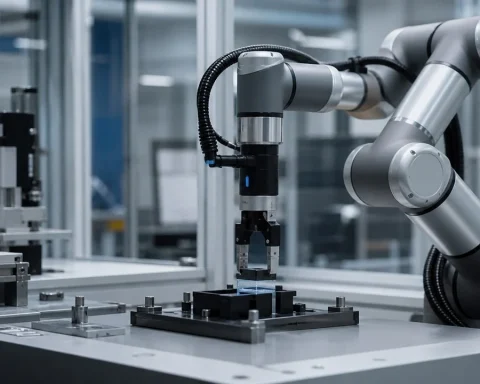
Its technology stack includes GITA, a refuellable propulsion system designed for satellite mobility; CHAKSU, an AI-powered sensing system intended to help spacecraft navigate and perform precise proximity operations; and RAMA, a robotic arm developed for manipulation and servicing tasks in space.
These technologies ultimately feed into VEDA, the company’s autonomous servicing platform.
By combining propulsion, robotics, sensing and autonomous navigation, InspeCity hopes to build an integrated infrastructure capable of carrying out increasingly sophisticated operations in orbit.
Funding to Help InspeCity Scale
The fresh capital will also support InspeCity’s transition from a research-focused startup into a commercial space company.
The company plans to expand its engineering, manufacturing and mission-execution capabilities while increasing commercial deployment of its GITA propulsion systems and RIG technology.
InspeCity currently employs around 70 people and plans to more than double its workforce as it prepares for the upcoming missions. Government programmes, including India’s Innovations for Defence Excellence initiative, are also expected to contribute funding towards some of its projects.
India’s Private Space Sector Continues to Attract Capital
InspeCity’s raise comes amid growing investor interest in India’s emerging private space industry.
Between January and July 2026, companies operating in the country’s space-tech ecosystem reportedly attracted around $113 million across 25 funding rounds, as startups increasingly pursue opportunities ranging from satellite manufacturing and launch technology to orbital infrastructure and servicing.
InspeCity previously raised $1.5 million in pre-seed funding in 2023, followed by a $5.6 million seed round in 2025.
Its latest $10.5 million raise now places the company in a stronger position to prove whether technologies developed on Earth can successfully perform some of the most difficult engineering tasks in orbit.