Whether you’re heading home after dinner, leaving a concert or travelling somewhere unfamiliar, getting to your destination safely matters as much as getting there on time. For many South Africans, e-hailing has become part of how they move around, including during the evening and late at night. But how much do you know about the safety tools available before, during and after a trip?
From checking your driver’s details to knowing how to access emergency assistance whenever you need it most, a few simple habits can help you make better-informed decisions whenever you book a ride. Here are five practical safety habits, with examples of how technology, including features available on Uber, that are worth knowing before your next trip.
1. Always verify your driver and vehicle before getting in
Never assume a vehicle is yours simply because the driver says your name or the car looks right. Check the number plate, vehicle make and model, and driver photo against the details in your app before getting in.
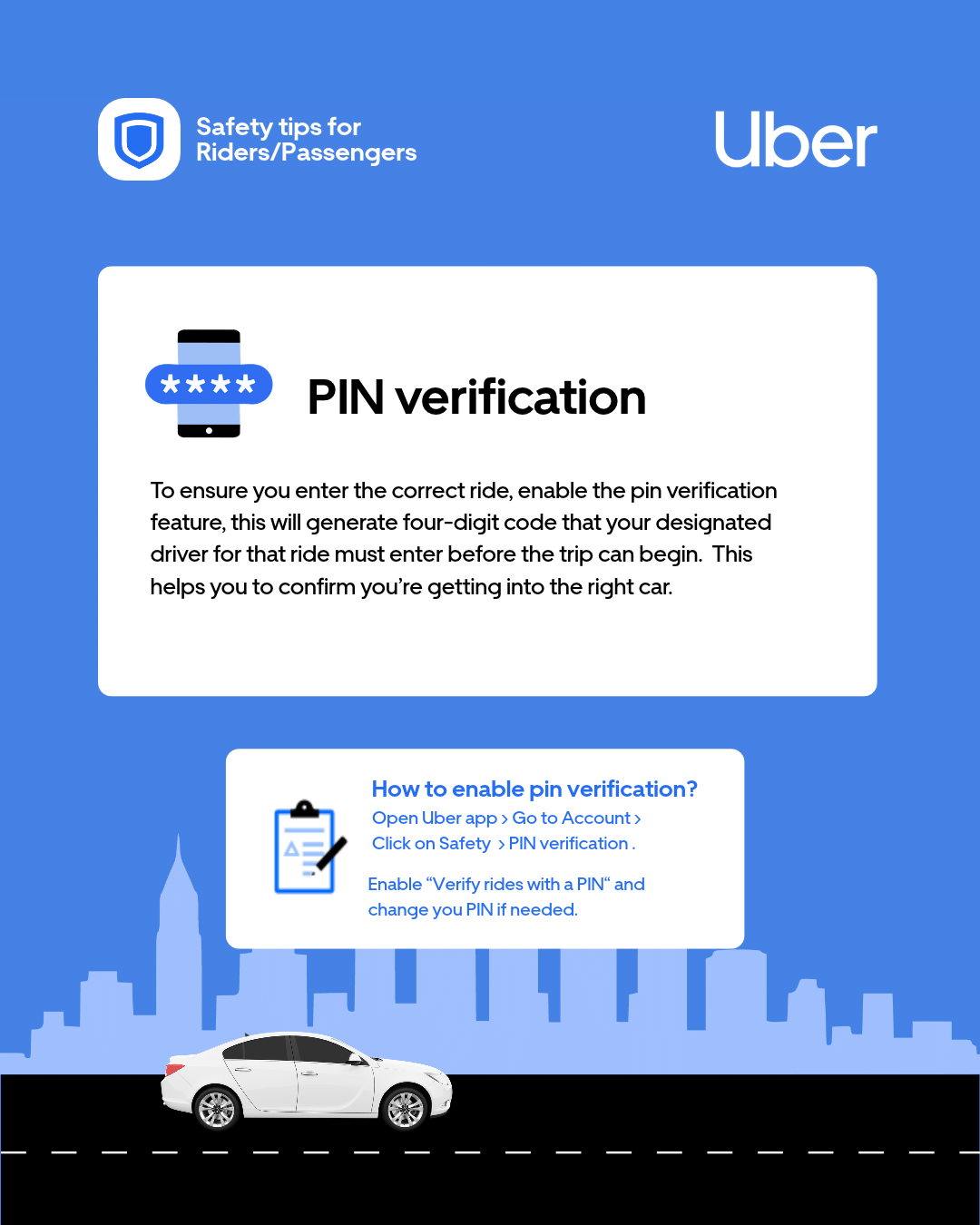
For an additional layer of verification, Uber offers an optional PIN Verification feature. Once enabled, riders receive a unique four-digit PIN that the driver must enter before the trip can begin. Riders can choose to use it on every trip or only at night, where the feature is available.
2. Share your trip with someone you trust
Sharing your journey with someone you trust can provide an additional layer of reassurance, particularly when travelling alone or late at night.
Features like Uber’s Share My Trip lets riders share live trip details, including the route and estimated arrival time, with friends or family. Trusted Contacts can also be configured in advance to make sharing journeys more convenient.
3. Know what to do if something feels wrong
Most journeys are uneventful, but knowing what to do when something does not look right can make a difference. Uber’s RideCheck uses GPS and sensor data to help detect certain unexpected events during a trip, such as an unusually long stop or a possible crash, where the feature is available. When a potential issue is detected, the app may check in with the rider and driver and offer options for getting help.
The feature is designed to provide an additional layer of support, rather than replace a rider’s or driver’s own judgement. If you notice an unexpected route change, feel uncomfortable or have a concern about your trip, you can also use the app’s safety tools and support channels to seek assistance or report the issue.
Knowing where to find these options before you need them is an important part of preparing for a journey.
4. Use audio recording to document safety concerns
Sometimes, having a record of an interaction can help when a safety concern arises during a trip. Uber’s in-app Audio Recording feature allows riders and drivers to record audio during a trip using their mobile devices, providing an additional way to document an incident.
Recordings are encrypted and stored on the user’s device, rather than automatically uploaded to Uber. Neither the rider nor the driver can listen back to a recording through the feature. If a safety incident occurs, the recording can be attached to a report submitted to Uber, allowing the relevant team to access it as part of its investigation.
5. Remember that driver safety matters, too
Conversations about e-hailing safety often focus on riders, but drivers also face risks on the road. These can include difficult interactions, unfamiliar destinations and the challenges associated with driving for long hours.
Several features are designed to support both sides of the trip. Uber’s two-way rating system allows both riders and drivers to provide feedback about their trips. In-app communication features can also help protect personal phone numbers, while driving-break reminders support drivers in managing fatigue.
Riders and drivers alike should treat each other respectfully, follow road-safety rules and report concerning behaviour through the appropriate channels.
6. Know how to access emergency assistance
In an emergency, knowing where to find help is important. Rather than waiting until something happens to familiarise yourself with the app, take a moment to explore its safety tools before your next trip.
Uber’s in-app Safety Toolkit, accessible through the shield icon during a trip, provides access to available safety features, including emergency assistance. In South Africa, Uber has partnered with AURA to help connect users with emergency-response services. Depending on the circumstances, this can help coordinate security or medical assistance.
For immediate emergencies, contact the appropriate emergency service and follow its instructions. In-app tools can provide another route to assistance, but should not be treated as a guarantee of a particular response or outcome.
Make safety part of every trip, not just an emergency measure
Safety does not begin when something goes wrong. It starts with the decisions people make before a journey and continues throughout the trip.
For riders, that means checking the vehicle and driver details, using available verification features, wearing a seat belt and sharing trip details when appropriate. It also means reporting concerning behaviour rather than assuming someone else will raise the issue.
For drivers, it means following road-safety rules, remaining alert, taking appropriate breaks and using the platform’s available safety and support tools.
Uber’s South Africa Economic Impact Report highlights the role ridesharing plays in helping people travel at night. According to the report, 76% of riders said it would be very or somewhat difficult to find a safe way to travel at night without ridesharing services. The report also found that safety is an important consideration for female riders.
These findings underline why safety remains an important part of the e-hailing conversation. Technology can provide tools and additional layers of support, but it works alongside informed decisions, responsible behaviour and effective responses when incidents are reported.
Getting home safely is a shared responsibility. It starts before the car pulls up and continues until everyone reaches their destination.