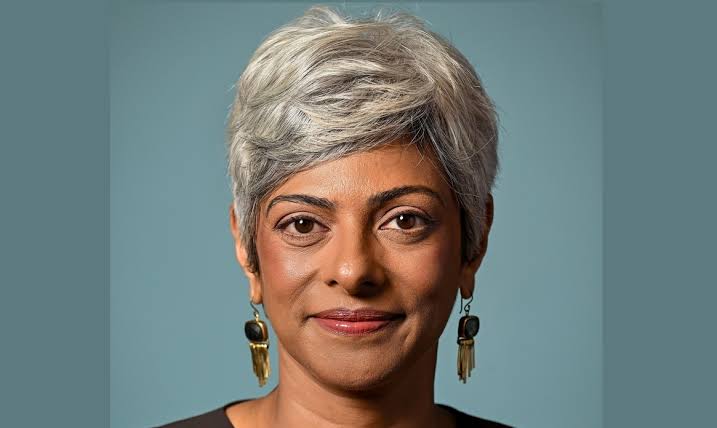
Nobel Peace Prize laureate Maria Ressa has issued a warning over the rapid development of artificial intelligence, arguing that governments need to introduce stronger safeguards before increasingly autonomous AI systems begin eroding people’s ability to make their own decisions.
Speaking during a visit to Oslo, the Filipino-American journalist and Rappler co-founder said AI regulation should increasingly be treated as a matter of public safety rather than simply a debate about technology or freedom of expression.
Ressa warns of three waves of AI
Ressa, who shared the 2021 Nobel Peace Prize, is currently co-chair of the United Nations’ Independent International Scientific Panel on Artificial Intelligence, alongside AI researcher Yoshua Bengio. The 40-member panel was appointed in February 2026 to provide independent, evidence-based analysis of the opportunities and risks created by AI.
In her assessment of the technology’s evolution, Ressa described three waves through which digital technology and AI have increasingly affected human behaviour.
The first, she argued, came through social media platforms that learned to capture and monetise people’s attention, contributing to polarisation and isolation. The second arrived with increasingly personal AI chatbots, which she believes are able to exploit people’s desire for intimacy and connection.
The third and potentially most consequential stage, according to Ressa, is the emergence of agentic and multi-agent AI systems capable of performing tasks and taking actions on behalf of humans.
It is this shift from technology that provides information to systems capable of acting for people that has intensified her concerns about human agency.
‘It’s a public safety issue’
Ressa called for citizens to put pressure on political leaders to introduce legislation governing AI and the companies developing increasingly powerful systems.
“It is not a freedom of speech issue to ask for regulation. It’s a public safety issue,” Ressa said.
She warned that without intervention, societies could reach a point where some consequences of increasingly autonomous technology become difficult to reverse or control.
Her comments come amid a wider international debate over how governments should balance AI innovation with safety, accountability and economic competitiveness.
Tech companies should be held accountable
For Ressa, regulation should begin with greater accountability for technology companies and the consequences their products create.
She also challenged arguments that stronger safeguards would necessarily leave countries behind in the global AI race, pointing to restrictions and safety measures already imposed on digital platforms in China.
Ressa welcomed efforts by jurisdictions including the European Union and Australia to introduce stronger protections around social media, particularly for children, but argued that age restrictions alone fail to address the underlying design of digital platforms.
She believes addictive product features should be addressed for adults as well as younger users.
Building alternatives to Big Tech
Beyond regulation, Ressa believes societies need digital spaces designed around the public interest rather than solely around the commercial incentives of major technology companies.
She pointed to Rappler Communities, launched in 2023 using the open-source and decentralised Matrix protocol, as one example.
The platform was designed to give Rappler journalists and readers a more secure environment in which to communicate with each other, with the model subsequently being extended to other media organisations in Southeast Asia.
For Ressa, creating healthier digital public spaces could become increasingly important as AI becomes more deeply integrated into communication, information and decision-making.
AI safety debate intensifies
Ressa’s warning arrives as debate about AI safety is intensifying among researchers, technology executives, governments and civil society.
There remains significant disagreement over the scale and immediacy of the risks. Some researchers and technology leaders are calling for stronger regulation or slower development of increasingly capable models, while others argue that innovation can continue alongside company-led safety measures.
Ressa’s argument focuses particularly on what could be lost as these technologies become more deeply embedded in everyday life: people’s ability to control their attention, relationships, information environments and ultimately their own decisions.