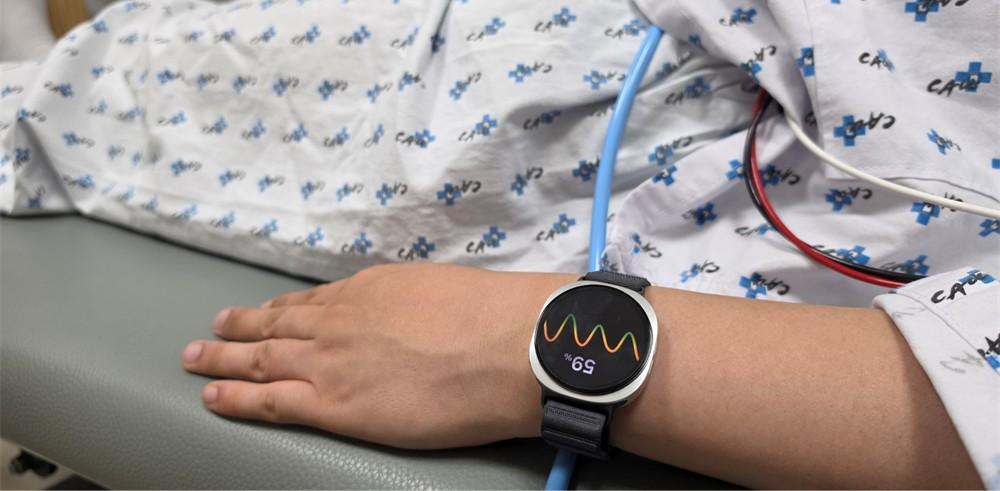
Samsung Electronics has announced a breakthrough in wearable healthcare technology after a joint clinical study with Chung-Ang University Gwangmyeong Hospital successfully demonstrated that the Samsung Galaxy Watch6 can predict vasovagal syncope (VVS) — commonly known as fainting — with high accuracy using biosignals collected from the smartwatch.
The development marks a major milestone for the growing digital health industry, as the research is believed to be the world’s first successful demonstration of a commercial smartwatch predicting syncope episodes before they occur.
Smartwatch Technology Could Prevent Serious Injuries
Vasovagal syncope happens when a person’s heart rate and blood pressure suddenly drop due to triggers such as excessive stress, causing temporary loss of consciousness. While the condition itself is usually not fatal, fainting can lead to dangerous falls and secondary injuries including fractures and concussions.
According to Junhwan Cho, the ability to provide an early warning could significantly reduce the risks associated with sudden fainting episodes.
“Up to 40% of people experience vasovagal syncope over their lifetime, with one-third experiencing recurrent episodes,” said Cho. “An early warning could give patients advance time to get into a safe position or call for help, which would dramatically reduce the incidence of secondary injuries.”
AI and Heart Rate Variability Drive Prediction Accuracy
The joint research team evaluated 132 patients with suspected VVS symptoms during medically induced fainting tests. Using the Galaxy Watch6’s photoplethysmography (PPG) sensor, researchers collected heart rate variability (HRV) data and analyzed it through an AI-powered algorithm.
The model was able to predict impending fainting episodes up to five minutes before they occurred with an accuracy rate of 84.6%. Researchers also recorded a clinically meaningful sensitivity of 90% and a specificity of 64%.
The findings were published in Volume 7, Issue 4 of the European Heart Journal – Digital Health, one of the world’s leading medical journals focused on digital healthcare innovation.
Samsung Pushes Preventive Healthcare Vision
Samsung says the study highlights how wearable devices are increasingly shifting healthcare away from reactive treatment and toward preventative, personalized wellness solutions.
Jongmin Choi said the company sees wearable technology playing a central role in the future of healthcare.
“This study is an example of how wearable technology can help shift healthcare from being designed for ‘post-care’ to a model of ‘preventive care,’” said Choi. “We are committed to driving technological innovation that empowers our users to lead healthier everyday lives.”