Spotify concluded the second day of its Loud & Clear Johannesburg office opening programme by building on its mission to empower African talent. The day featured a series of practical sessions designed to strengthen the local creative ecosystem and provide artists with the tools to scale their careers globally.
The programme connected artists and creators directly with Spotify teams to share insights on discovery, audio innovation, and the future of the South African sound. Central to the day were artist-focused workshops showcasing new and improved Spotify for Artists features.
Here are the key takeaways from the sessions on mastering the creative process and navigating the editorial landscape:
Transparency, control, and integrity
In an era of rapidly evolving technology, Bryan Johnson, Head of Artist & Industry Partnerships, International at Spotify, defined some of the platform’s guiding principles for protecting creators.
Johnson highlighted that Spotify has replaced the traditional blue tick with a new verification system designed to prioritise authentic human artistry. This requires sustained activity with at least 10,000 monthly active users, alongside platform compliance and profile authenticity, which involves real-world engagement such as performing live or selling merchandise. He noted that profiles representing primarily AI-generated artists are currently ineligible for this verification.
The platform has also expanded credits using SongDNA to give greater visibility to songwriters, producers, and engineers, ensuring every contributor is recognised. Additionally, a non-compulsory test feature for AI Credits allows artists to optionally disclose the use of responsible AI. This initiative aims to establish a uniform, industry-wide approach to clarifying AI usage in music.
The importance of creative ownership and authenticity
African R&B and Afropop force, Rolene, shared a definitive stance: self-sufficiency is non-negotiable. She stressed that mastering technical skills, such as self-engineering using software like Ableton, Logic, or Cubase, is the key to total creative control. By training for immediate creativity, artists can develop game-changing ideas independently before entering a collaborative space.
Unlock the editorial gate: Master the pitch playbook
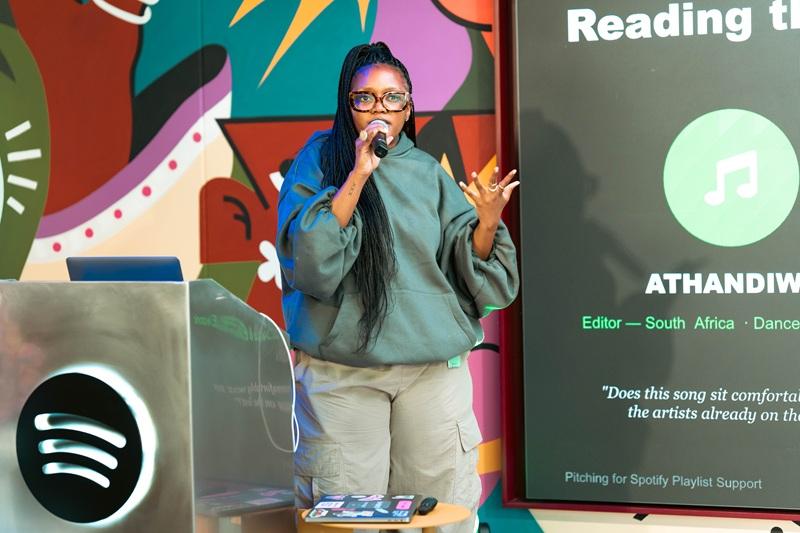
Spotify editors Athandiwe Ntshinga and Benewaah Boateng handed over the blueprint for maximising discovery, noting that the most crucial step for gaining visibility is securing access to Spotify for Artists to ensure every pitch detail is meticulously filled out. They also emphasised the importance of respecting the non-negotiable two-week lead time before a release date to allow editors around the world sufficient time to review and place music effectively.
Celebrating African Creativity
As part of Spotify’s dedication to the continent’s aesthetic, the platform partnered with Yay Abe to create a bold mural at the entrance of the new Johannesburg office. The work reflects Spotify’s purpose in Africa, brought to life through Yay Abe’s signature vibrant and uplifting style.
The event concluded with “The Honest Hour,” a candid conversation on supporting women in the industry, reinforcing Spotify’s commitment to building a more inclusive and sustainable creative economy in South Africa and beyond.