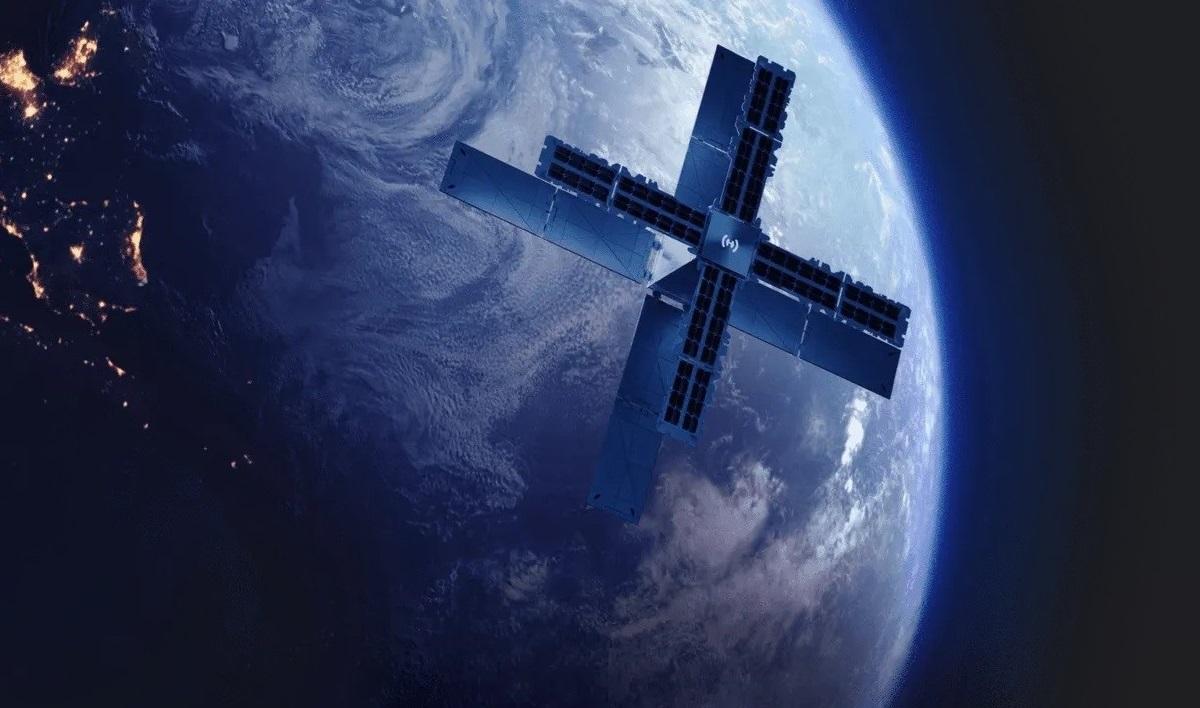
Satellite technology startup Hubble Network has raised $200 million in Series C funding, accelerating its ambitious plan to allow everyday Bluetooth devices to communicate directly with satellites orbiting Earth.
The latest investment reportedly values the Seattle-based company at approximately $1.6 billion, placing Hubble among a growing group of heavily funded startups attempting to reshape global connectivity through low-Earth-orbit satellite networks.
What makes Hubble’s approach particularly interesting is that it isn’t primarily trying to connect smartphones through conventional satellite technology. Instead, the company wants to bring satellite connectivity to the billions of devices already using Bluetooth Low Energy (BLE).
Taking Bluetooth beyond the smartphone
Bluetooth is normally associated with short-range connections between devices such as smartphones, headphones, fitness trackers, sensors and smart-home products.
Hubble Network is attempting to dramatically extend what the technology can do.
Its satellite network is designed to allow compatible Bluetooth devices on the ground to transmit signals directly to satellites without relying on traditional cellular infrastructure.
That could potentially make it possible to track and communicate with connected devices in remote areas where mobile networks and Wi-Fi are unavailable.
The technology could have applications across industries including agriculture, logistics, infrastructure, environmental monitoring and asset tracking.
From six satellites to a global constellation
The fresh capital will help Hubble expand its satellite infrastructure as it works towards building a much larger constellation.
The company reportedly plans to increase its network from six satellites to around 60 by 2030, significantly expanding the coverage and capacity available through its platform.
Building a larger constellation could allow businesses to deploy connected sensors and tracking devices across areas that have traditionally been difficult or expensive to cover using terrestrial telecommunications networks.
For industries operating across farms, mines, shipping routes, forests and other remote environments, satellite-connected Bluetooth could provide another option for maintaining visibility over equipment and assets.
Satellite connectivity race gathers momentum
Hubble’s $200 million raise arrives as competition around satellite-powered connectivity continues to intensify.
Companies are increasingly exploring ways of connecting ordinary consumer and industrial devices directly to satellites, reducing dependence on specialised satellite terminals.
The broader direct-to-device movement could eventually blur the boundaries between terrestrial telecommunications networks and satellite infrastructure.
Hubble is betting that Bluetooth — already embedded in billions of devices globally — can become part of that transformation.
Rather than requiring manufacturers to completely redesign connected products around expensive satellite hardware, the company wants existing Bluetooth technology to become a gateway to space-based connectivity.
A $1.6 billion bet on connected devices
The reported $1.6 billion valuation attached to Hubble’s latest funding round highlights investor interest in technologies sitting at the intersection of satellites, telecommunications and the Internet of Things.
If Hubble can successfully scale its constellation, satellite connectivity could become available to an entirely new category of inexpensive sensors and devices.
The company’s challenge will now be turning its technological breakthrough into infrastructure capable of operating reliably at global scale.