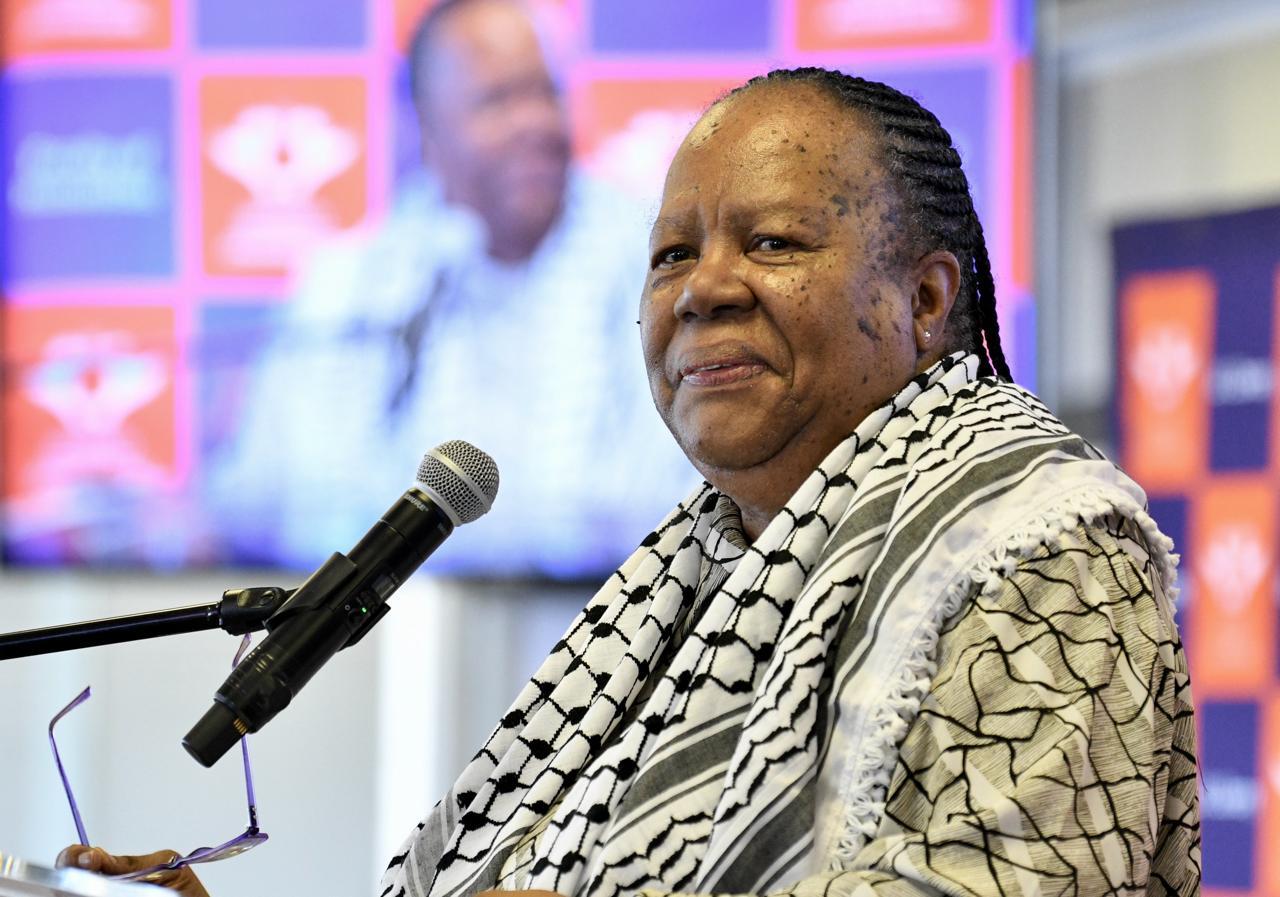
Deputy Minister of Higher Education and Training Dr Nomusa Dube-Ncube has challenged South African girls and young women to reject outdated gender stereotypes and pursue careers in artificial intelligence, coding, robotics and engineering, saying the country can no longer afford to waste female talent.
Speaking at the Standard Bank Top Women Conference in Sandton on Tuesday, 8 September, Dube-Ncube took aim at perceptions that some of the fastest-growing technology and engineering fields are better suited to men.
Her message comes as artificial intelligence and other emerging technologies increasingly reshape industries and create new categories of work, making access to digital and technical skills an important part of South Africa’s future workforce strategy.
‘Girls do belong’ in technology
Dube-Ncube directly challenged stereotypes that have historically discouraged girls from entering science and technology-related careers.
“For too long, chauvinism dressed up as common sense has told us that girls do not belong in engineering, coding, robotics and artificial intelligence,” she said.
“This was never tradition. It was and remains a stereotype and it has cost this country generations of talent we can no longer afford to waste.”
Her remarks position women’s participation in technology not simply as a gender equality issue, but as an economic necessity for a country attempting to develop the skills required by a rapidly changing global economy.
Women must build technology, not only consume it
A key part of Dube-Ncube’s message was the need for women to move beyond being consumers of new technologies and become the engineers, developers, entrepreneurs and innovators creating them.
She said the Department of Higher Education and Training is working through universities and Technical and Vocational Education and Training colleges to equip girls and young women with relevant skills.
The department has increasingly placed future-focused skills at the centre of its strategy. Earlier this year, Dube-Ncube said South Africa’s skills pipeline needed to respond to the Fourth Industrial Revolution through investment in STEAM disciplines and the modernisation of TVET colleges.
South Africa cannot afford to leave female talent behind
The push comes amid wider efforts to increase female participation in STEM.
In August, the University of Pretoria hosted a Girls in STEM Initiative bringing together learners, researchers, government and industry representatives to encourage more young women to pursue science, technology, engineering and mathematics.
The programme highlighted the continued global gender gap in these disciplines, with women accounting for only around 35% of STEM graduates worldwide.
South Africa has also been expanding practical initiatives exposing schoolgirls to coding and robotics. Programmes such as the African Girls Can Code Initiative have introduced young women to computer science, website development, app creation and robotics while connecting those skills to potential study and career opportunities.
Education can unlock economic independence
Dube-Ncube also connected access to education and technical skills with a much broader issue: women’s economic independence.
She argued that education and employable skills can give women greater financial freedom, including the ability to escape situations in which economic dependence leaves them vulnerable.
But getting women qualified is only one part of the challenge.
South Africa also needs to ensure that young people leaving universities and colleges can translate their qualifications into meaningful economic participation.
Dube-Ncube recently warned that young people can possess technical skills and still struggle to enter the economy if they lack access to employment, markets, finance and industry opportunities.
Private sector challenged to do more
Dube-Ncube therefore challenged businesses to move beyond short-term interventions aimed at supporting women.
“Companies need to move beyond once-off sponsorships and corporate social investment programmes,” she said.
Instead, she called for long-term commitments to skills development, workplace training and mentorship, alongside greater opportunities for women-owned businesses.
The challenge places responsibility not only on young women to enter traditionally male-dominated industries, but also on companies to create environments in which they can build sustainable careers.
The race for the jobs of the future
As AI, automation, robotics and digital technologies continue changing the skills demanded by employers, the question of who gets trained to build and control those technologies is becoming increasingly important.
South Africa has already begun expanding access at school level. A robotics and digital learning lab launched at Joe Slovo Engineering High School in Khayelitsha this year, for example, gives learners hands-on access to robotics kits, microcontrollers, laptops and sensors, with senior learners also exposed to artificial intelligence and Internet of Things applications.
For Dube-Ncube, ensuring girls are part of this technological transition means confronting stereotypes before they influence the subjects young women choose, the qualifications they pursue and ultimately the industries they enter.