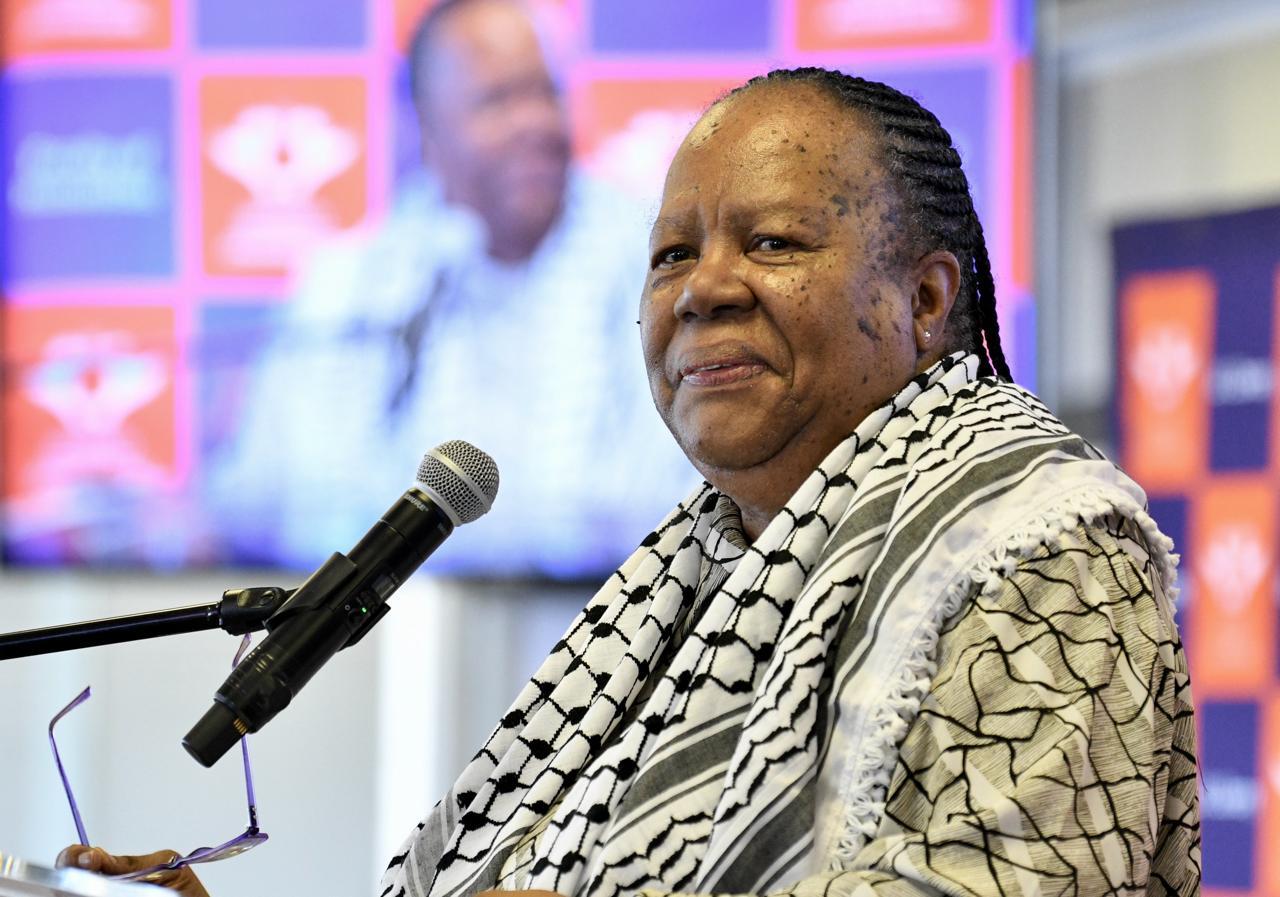
Former Cabinet minister Naledi Pandor has called on women to take a more decisive role in shaping South Africa’s economic and social future, arguing that the country cannot achieve meaningful transformation while women remain under-represented in positions of power.
Speaking at the Standard Bank Top Women Conference in Sandton on Tuesday, 8 September, Pandor said that despite the progress made since the advent of democracy, women continue to face poverty, violence, unequal pay and sexual harassment at disproportionate levels.
Her message was clear: progress in representation must now translate into women having greater influence over the decisions shaping businesses, government and society.
Women remain under-represented at the top
Pandor highlighted the continuing gap between the progress women have made professionally and their representation in the country’s most powerful leadership positions.
Women account for fewer than 40% of private-sector board positions and remain under-represented as board chairs and chief executives, as well as in senior positions such as directors-general in government.
“These are systemic challenges we must insist are addressed and which we must address together,” Pandor said.
The figures reinforce one of the central themes of this year’s Standard Bank Top Women Conference: moving the conversation beyond representation towards meaningful economic participation and influence.
Held at the Sandton Convention Centre on 8 and 9 September, the conference is taking place under the theme “Her Power. Africa’s Future. Amplifying Women-Led Growth.”
Women must help build the next economy
Pandor argued that women should not simply wait for existing institutions to create space for them but should increasingly become creators of economic opportunity themselves.
Against a rapidly changing global economic and geopolitical environment, she identified the creation of new businesses, development of new skills and adoption of new development strategies as areas where women leaders can make a significant contribution.
Her comments come as South Africa continues to grapple with sluggish economic growth and high unemployment.
Pandor also placed the issue within a broader African context, saying women have an important role to play in advancing the African Union’s Agenda 2063 and unlocking opportunities associated with the African Continental Free Trade Area.
Progress has been made — but challenges remain
Pandor acknowledged that South Africa has made important advances in women’s empowerment over the past three decades.
More women are accessing higher education and entering professions that were historically dominated by men, while women’s representation has also expanded across politics, law and the judiciary.
However, she warned that difficult socioeconomic conditions could undermine those gains, particularly for working-class and rural African women.
Pandor called for greater support for women who are simultaneously navigating professional careers, family responsibilities and other pressures.
Lessons from the women of 1956
Drawing on the legacy of the historic 1956 Women’s March, Pandor encouraged today’s generation of women leaders to embrace forms of leadership rooted in collaboration rather than feeling compelled to replicate traditional models of power.
“Women of 1956 demonstrated the power of unity, organisation, planning and collective action,” she said.
For Pandor, that history provides a blueprint for the kind of leadership required in modern South Africa — one in which women work collectively across business, government and civil society to confront structural inequality.
From representation to real influence
Pandor’s remarks align closely with the broader focus of this year’s Top Women Conference, which is examining how women can gain greater access to finance, markets, technology, business networks and leadership opportunities.
The programme is also tackling entrepreneurship, artificial intelligence, digital transformation, STEM careers, supplier development and the future of work as part of a wider discussion about women’s role in Africa’s next phase of economic growth.
Pandor ultimately challenged women who have already reached positions of influence to use that power to open doors for others and contribute to a more inclusive society.
“Our task, I believe, is to multiply our successes and become leaders that serve, unify, innovate and succeed with integrity,” she said.