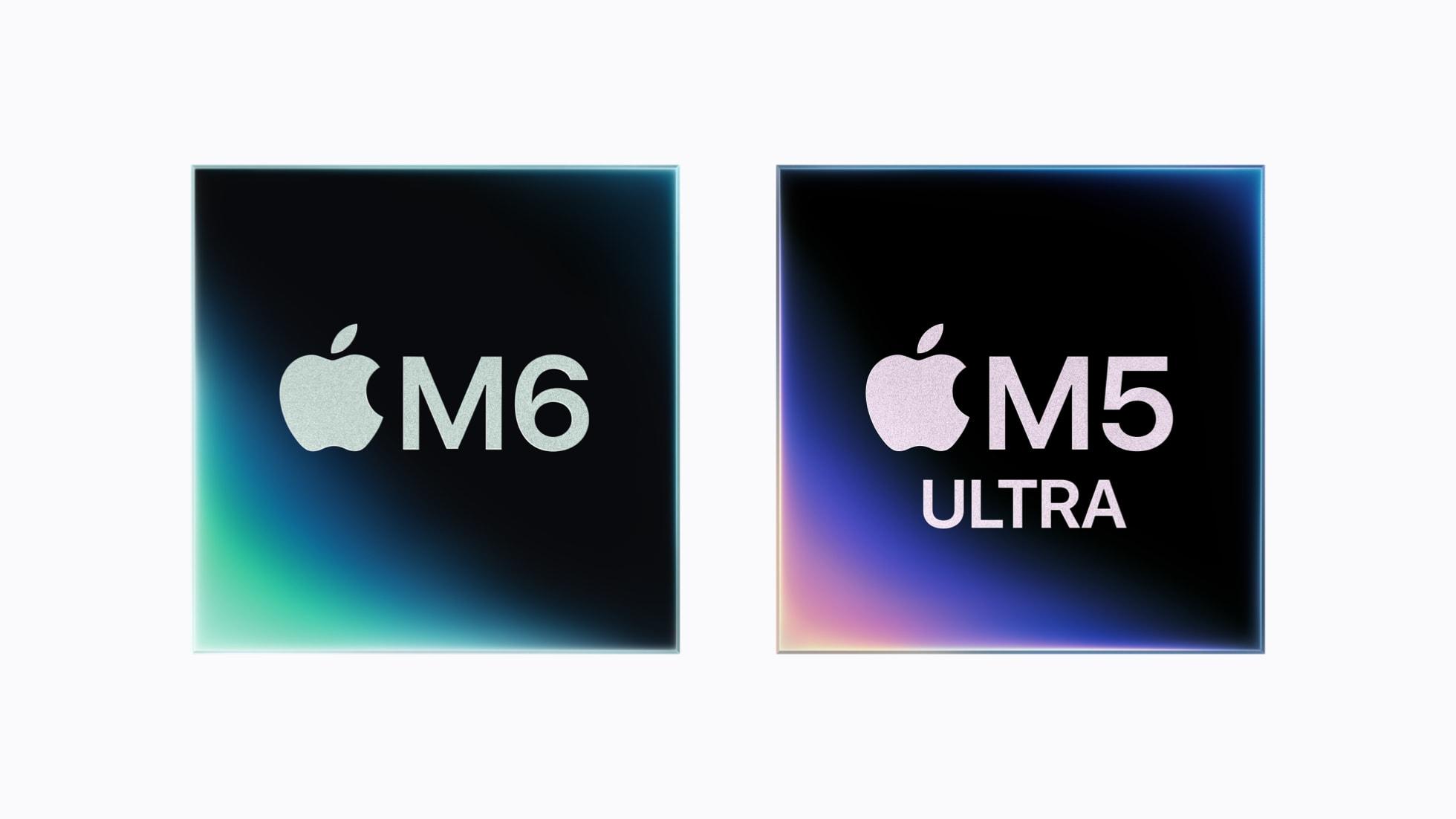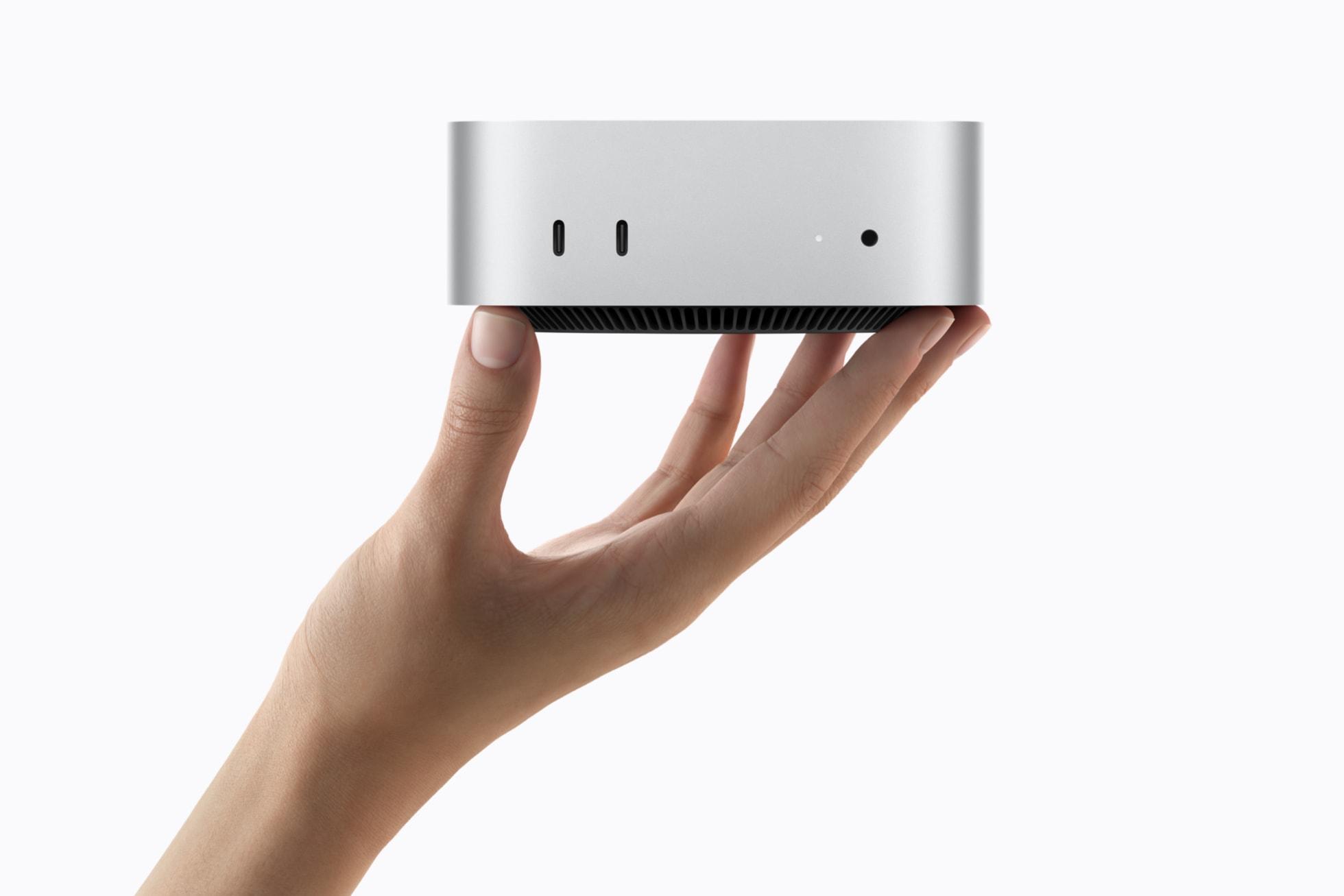
Apple has introduced a new generation of the Mac mini powered by its M6 and M5 Pro chips, promising major gains in artificial intelligence, graphics and overall computing performance while retaining the desktop’s remarkably compact design.
Announced on 25 August, the new Mac mini delivers up to four times faster AI performance, twice the graphics and storage performance, and up to 40% faster CPU performance with the M6 configuration. Apple is increasingly positioning the machine not only as a conventional desktop, but also as an always-on computer capable of running AI agents and other advanced workloads.
M6 Turns Mac Mini Into an AI Powerhouse
The headline upgrade is Apple’s new M6 chip.
Mac mini with M6 features a 12-core CPU, adding two cores compared with the previous generation, alongside a new 12-core GPU. For the first time on Mac mini, every GPU core incorporates a Neural Accelerator.
According to Apple, the combination delivers up to four times faster AI performance and twice the graphics performance of the Mac mini with M4.
The machine also features Apple’s new Dual 16-core Neural Engine, which the company says provides up to twice the performance of the previous generation. Unified memory starts at 16GB and can be configured up to 32GB, with memory bandwidth reaching 170GB/s.
Huge Gains for Local AI Models
Apple is making some particularly bold performance claims around artificial intelligence.
The company says the M6 Mac mini can deliver up to 13.5 times faster large language model prompt processing in LM Studio compared with the original M1 Mac mini and up to 4.8 times faster performance than the M4 model.
Spreadsheet calculations in Microsoft Excel are claimed to be up to 2.3 times faster than on the M1 Mac mini, while gaming performance with ray tracing in Cyberpunk 2077: Ultimate Edition can reach twice the performance of the M4 Mac mini.
M5 Pro Takes Aim at Professional Workflows
For users requiring considerably more power, Apple is also introducing a Mac mini powered by the M5 Pro.
The higher-end chip can be configured with up to an 18-core CPU and 20-core GPU, targeting demanding workloads including app development, video rendering, scientific simulations, 3D design, visual effects and game development.
Neural Accelerators are incorporated into every GPU core, enabling more demanding AI workloads such as image and video upscaling and running large diffusion models locally.
The M5 Pro Mac mini supports up to 64GB of unified memory and offers 307GB/s of memory bandwidth, providing enough capacity for larger local AI models, complex 3D projects, ProRes RAW editing and large research datasets.
Apple says LLM prompt processing can be up to 8.5 times faster than the Mac mini with M2 Pro, while Blender ray-tracing rendering can be up to 4.5 times faster.
Connectivity Gets a Major Upgrade
The new generation also brings substantial connectivity improvements.
Both configurations support Wi-Fi 7, Bluetooth 6 and 2.5Gb Ethernet as standard, with a 10Gb Ethernet option available.
The M6 version features three Thunderbolt 4 ports at the rear, while the M5 Pro model receives three Thunderbolt 5 ports. Both also offer HDMI, Ethernet, two front-facing USB-C ports and a headphone jack.
Thunderbolt 5 additionally allows multiple Mac mini systems to be clustered together to run larger AI models entirely on-device. Apple has also introduced genlock support through USB-C for synchronising displays and cameras, including the iPhone 17 Pro.
macOS 27 Golden Gate Joins the Package
The new Mac mini will run macOS 27 Golden Gate, which Apple says introduces performance and usability improvements across the operating system.
Among the changes are faster AirDrop transfers, improved network file browsing and quicker Safari start-page loading. Apple has also rebuilt the search foundation underpinning Spotlight, Photos and Mail to maintain a more comprehensive and regularly updated index.
The operating system also introduces further refinements to Apple’s Liquid Glass interface alongside improvements to Maps, Notes and Podcasts.
Apple Pushes the Mac Mini Beyond the Traditional Desktop
“Mac mini has always been our most versatile Mac,” said Johny Srouji, Apple’s chief hardware officer, noting its use across homes, professional studios and increasingly as an always-on device for AI workloads.
The strategy reflects a broader shift in personal computing as technology companies race to move more generative AI processing from remote cloud infrastructure directly onto consumer and professional devices.
For Apple, the Mac mini’s combination of compact dimensions, high memory bandwidth and increasingly powerful Neural and GPU architecture could make the machine particularly attractive to developers and businesses looking to experiment with locally hosted AI.
Pricing and Availability
Pre-orders for the new Mac mini opened on 25 August, with availability scheduled to begin on 22 September.
In the United States, the Mac mini with M6 starts at $899, while the more powerful M5 Pro configuration starts at $1,699. Education pricing starts at $799 and $1,599 respectively.
Beyond the raw performance numbers, the new Mac mini demonstrates where Apple increasingly sees the future of the Mac: a machine capable of running sophisticated AI workloads privately and locally without sacrificing the small footprint that has defined the Mac mini for more than two decades.