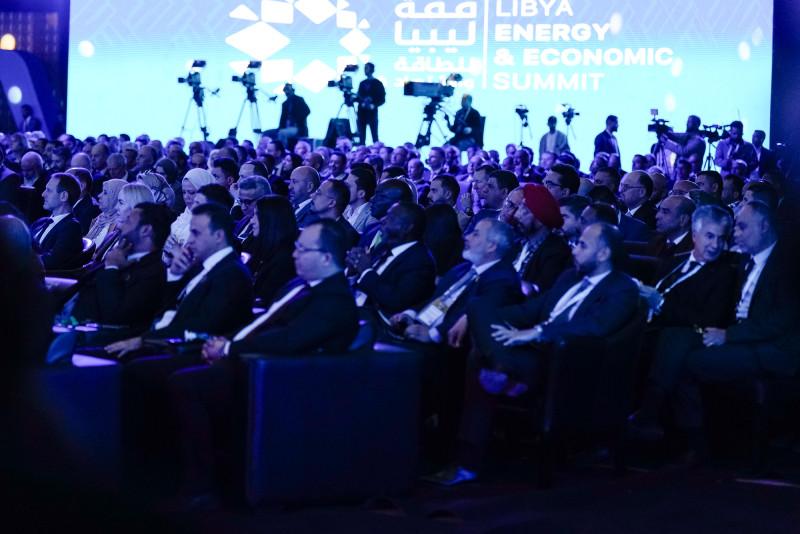
The second day of the Libya Energy & Economic Summit (LEES) 2026 in Tripoli brought sharper focus to the country’s long-term energy ambitions, with concrete drilling targets, gas megaproject timelines, AI-led production strategies and renewed offshore exploration momentum taking center stage. Discussions underscored Libya’s scale as an energy market and the growing depth of international partnerships across hydrocarbons, services and renewables.
Libya Targets 70–100 Wells in 2026
Libya’s Minister of Oil and Gas announced plans to drill between 70 and 100 oil and gas wells in 2026, signaling a major step-up in upstream activity. The program is aligned with the country’s licensing round and evolving investment framework, and is expected to be backed by annual investment flows of $3–4 billion.
To support the expanded drilling campaign, Libya is introducing unified drilling regulations aimed at improving safety, operational efficiency and coordination across operators and service providers.
Eni Confirms Timeline for $8 Billion Gas Megaproject
Italian energy major Eni reaffirmed its long-term commitment to Libya, confirming that the $8 billion Structures A&E offshore gas development remains on track for completion by the end of 2027.
Led by Mellitah Oil & Gas, a joint venture between Eni and Libya’s National Oil Corporation (NOC), the project is expected to deliver around 750 million standard cubic feet per day of gas. The volumes will support domestic consumption while also creating export capacity for European markets. Eni also provided an update on the Bahr Essalam gas compression project, which is scheduled to come online in early 2026.
SLB Accelerates AI-Driven Digital Oilfield Rollout
Digital transformation featured prominently on day two, with SLB outlining plans to scale AI-driven production optimization and remote monitoring technologies across Libya from 2026.
The company highlighted the deployment of AI-powered ESP surveillance, Lumi data platforms and intelligent stimulation programs as key tools for improving mature field performance, supporting production targets and advancing zero-flaring objectives. SLB also emphasized its focus on local capacity building, announcing digital oilfield training and upskilling programs for Libyan engineers.
Mediterranean Deepwater Gains Strategic Importance
Libya’s Mediterranean offshore emerged as a strategic exploration frontier, with the NOC positioning deepwater acreage as central to future upstream growth.
With 11 offshore blocks included in the current licensing round and bid results expected in February 2026, industry leaders stressed the importance of high-quality seismic data, improved subsurface understanding and shorter development timelines in strengthening the offshore investment case.
PPPs Take Center Stage in Renewable Energy Push
Renewable energy discussions focused on public-private partnerships as the preferred model to scale Libya’s clean energy ambitions. The country is targeting 4 GW of renewable capacity by 2035, with projects such as TotalEnergies’ 500 MW Sadada solar plant cited as anchors for future development.
Panelists emphasized the role of solar and wind in reducing fuel use for power generation, while noting that clearer legislation and consistent regulatory frameworks will be critical to sustaining long-term investor confidence.
NESR Eyes Expanded Services Footprint
Oilfield services company National Energy Services Reunited (NESR) said it is positioning for an expanded role in Libya, supported by more than $100 million in recently secured service contracts across North Africa.
The company highlighted its technology portfolio, regional growth strategy and commitment to local employment, noting that its Libyan operations are supported by 100% national crews.
Repsol Signals Exploration-Led Growth from 2026
In a video address to LEES 2026, Repsol pointed to exploration as the next phase of its Libya strategy from 2026, with the current licensing round seen as a catalyst for renewed growth.
At the El Sharara field, Repsol is targeting production of 350,000 barrels per day by the end of 2026, following record output in 2025. The company said it is now shifting greater focus toward new exploration opportunities after several years of limited activity.
A Market Defined by Scale and Long-Term Optionality
Across day two of LEES 2026, a consistent message emerged: Libya’s energy opportunity set is widening and becoming more structured. With defined drilling targets for 2026, gas megaprojects moving closer to delivery, digital technologies reshaping production potential and renewed offshore and renewable momentum, the summit positioned Libya as a market built on scale, long-term ambition and expanding avenues for international partnership.