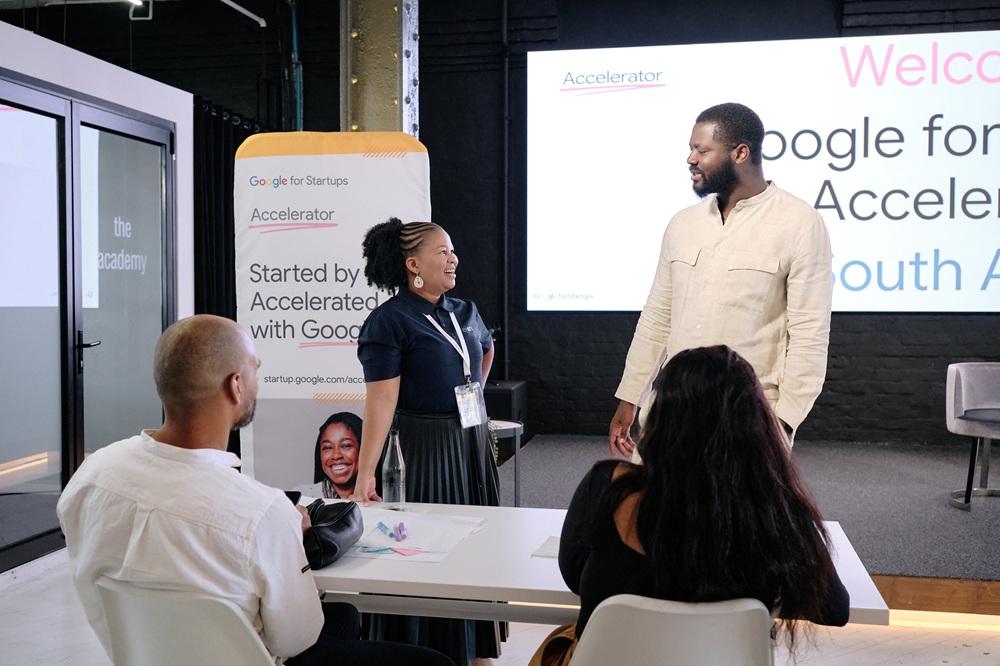
Following an intensive three-month programme, the ten South African startups chosen as part of the 2025 Google for Startups Accelerator Africa Program are now ready to catapult themselves into the next phase of their business success.
Chosen from 400 entries for their use of AI technologies in solving local problems, the ten startups represent a range of industries including agriculture, health, technology, energy and fintech.
Over the three months, they’ve received mentorship and technical support, undergone training and tapped into networks that will help them thrive well into the future. They’ve also received a financial boost in the form of up to R1 million in equity-free funding to help them scale.
Speaking during their graduation ceremony held in Cape Town, Google’s Head of Startup Ecosystem for Africa, Folarin Aiyegbusi said
“Google is committed to helping startups to grow, not only to drive local economic development, but to also contribute to a more inclusive, technologically-enabled future for South Africa and for the continent as a whole”.
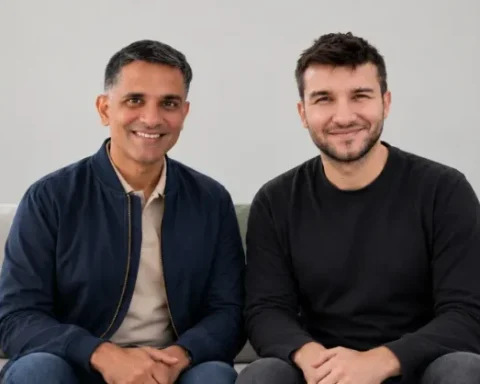
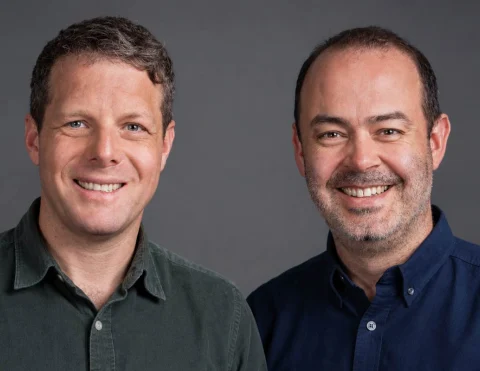
During the event, a panel discussion featuring Daniel Marlo, Managing Partner at 4X Ventures and Melvyn Lubega, Partner at Breega, and hosted by Oluwadunni Fanibe, Accelerator Portfolio Manager at Google, also provided insights into the investment landscape for startups.
Early impact:
Participating founders said they were already seeing the impact of the accelerator in their businesses, as the mentorship and technical expertise have allowed them to move from foundational development to market execution. In addition to the training, founders will also now receive up to R1 million in equity-free funding to help them scale even further.
Mishanth Ardithpersad, from the DevTools innovator Rapidhuman AI, highlighted the catalytic effect of the funding and technical support.
“This funding is the catalyst for our shift from ‘building’ to ‘deploying.’ We are allocating the R1 million to execute high-impact pilots with our corporate partners. This traction isn’t just revenue; it’s the concrete evidence we need to secure our Series A in 2026.”
For TeledoctorSA Director Dr. Hillary Mukudu, the mentorship provided validation and clarity.
“We always felt as if we were dreaming every time we tried to explain the product we were working on to potential customers.Talking to the infrastructure experts with Google expertise and getting their nod of approval on the feasibility and actually getting to see the product shaping up as we ‘dreamt’ gives us a feeling of fulfillment.”
Founder and CEO of fintech and savings app Squirrel Away, Sibongile Maputla, highlighted the program’s role in scaling and refining their user experience.
“The accelerator gave us the momentum and financial support to scale Squirrel Away faster and reach more South African families. In a country where saving is difficult for many households, this backing helps us turn small, consistent contributions into long-term opportunity and give children the financial foundation they deserve. It also positions us to create jobs as we grow, while empowering families to build generational wealth for their children.”
Pretty Kubyane, Tech Lead and co-founder of eFama App, an agritech solution, noted the strategic focus the program delivered.
“The program helped us sharpen our focus on what creates the most impact for farmers, instead of being pulled in every direction by the many needs in the industry. It made our solution clearer, stronger, and better aligned with South Africa’s real challenges.”
Looking ahead:
The founders now have their eye firmly on their futures, with plans to launch and scale.
Makudu said the next big milestone for TeledoctorSA is “the launch of the product on 25 May 2006 and Google has given us the credibility in the space to be able to attract even more investment.
Squirrel Away is also looking to launch its model-portfolio investment offering, and hopes to scale so that thousands of families can begin actively saving.
“Google has equipped us with the tools, mentorship, and technical depth to grow responsibly and attract future investment but just as importantly, it connected us to a global community of founders and experts whose insights will continue to guide our expansion”
Maputla said.
For eFama, the focus is on scaling and preparing for the next fundraising round.
“Our next milestone is scaling toward 50,000 farmers and 500,000 buyers, and securing investment to support that growth,”
Kubyane said.
Ardithpersad said that Rapidhuman AI will be looking to grow its enterprise market in South Africa in 2026, with the view on global export.
“This program went far beyond standard mentorship; it was a deep technical collaboration that elevated our operational standards to a global level. We are no longer just a local startup; we are a Google-backed technology partner with a validated, enterprise-grade architecture. This distinction significantly changes the conversation—and the valuation—when we walk into a boardroom,”
he said.